Editor’s pick
Buying guide
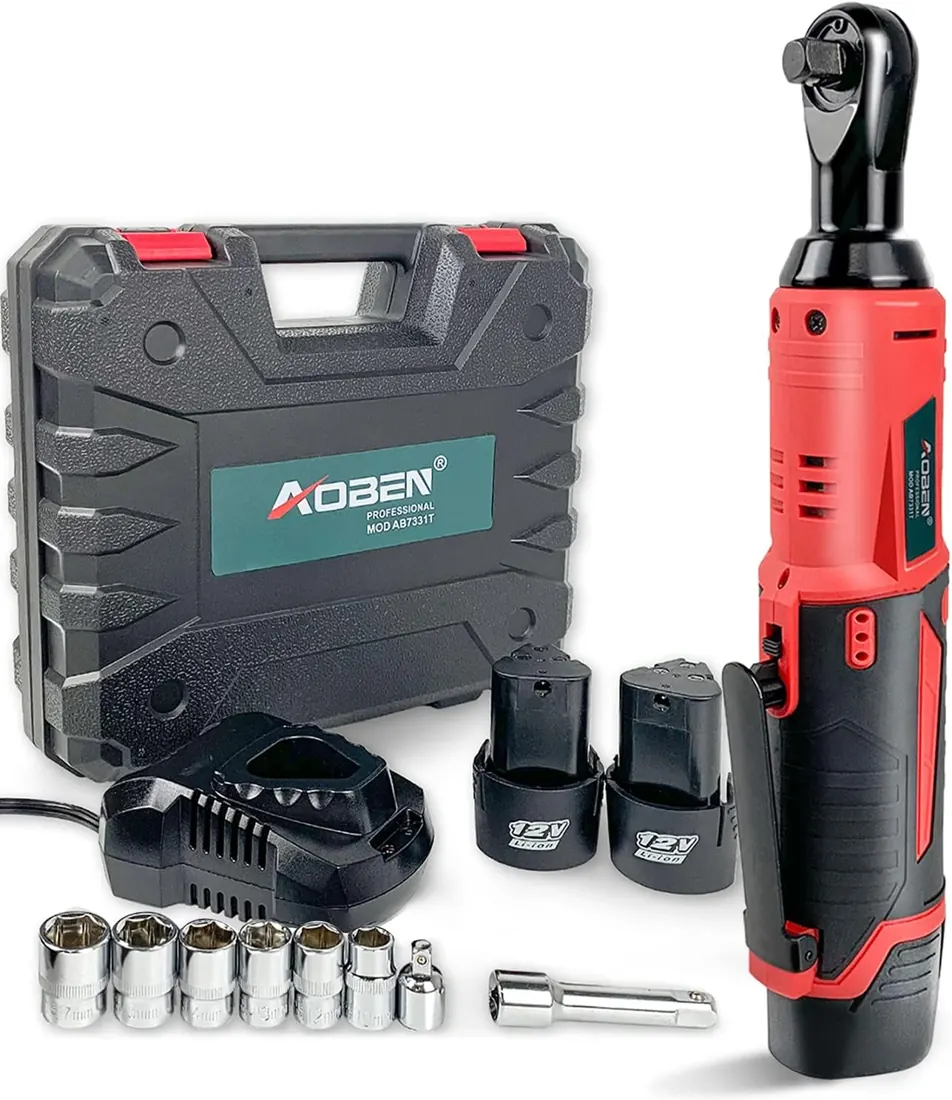
A cordless ratchet earns its space in the garage on one kind of job specifically: fasteners you have to spin many, many times by hand — a splash guard with a dozen small bolts, a battery tray, an interior panel, an oil pan. Swap the hand ratchet for a cordless one on those jobs and it's the difference between a few minutes and a sore wrist.
It's not a replacement for a torque wrench (final tightening on anything safety-critical still needs a calibrated torque spec) and it's not built for breaking loose high-torque fasteners like lug nuts — that's an impact wrench's job. What it's genuinely good for is speed on the removal and initial-install side of a job.
Battery capacity (mAh) determines how many fasteners you get through per charge before needing a swap — look for a set that ships with two batteries if you're doing a full job in one sitting. A 3/8" drive covers most sockets you'll actually use on a car. If you'll be reaching into tight engine-bay spaces, a compact head and low weight matter more than raw torque numbers.
For anything with more than a few bolts — oil pans, splash guards, brake calipers, battery trays — a cordless ratchet turns a repetitive, wrist-tiring job into seconds of work. It won't replace a torque wrench for final tightening, but for removal and initial installation it's a real time saver.
They solve different problems. A cordless ratchet is about speed on low-torque fasteners you're spinning many times. An impact wrench is about breaking loose high-torque fasteners like lug nuts, which a ratchet isn't built for. Many home mechanics eventually want both.
Battery capacity (mAh) determines how many fasteners you get through per charge, and a 3/8" drive covers most car sockets. If you'll be working in tight engine-bay spaces, compact head size and weight matter more than raw torque.